Wayne Hawkins — Independent for Clark
If you make the call, you carry the cost.
That principle applies to every issue — energy bills, housing, the stadium, military commitments made without a parliamentary vote. The people making the decisions should be the same people living with the consequences. Right now, too often they are not.
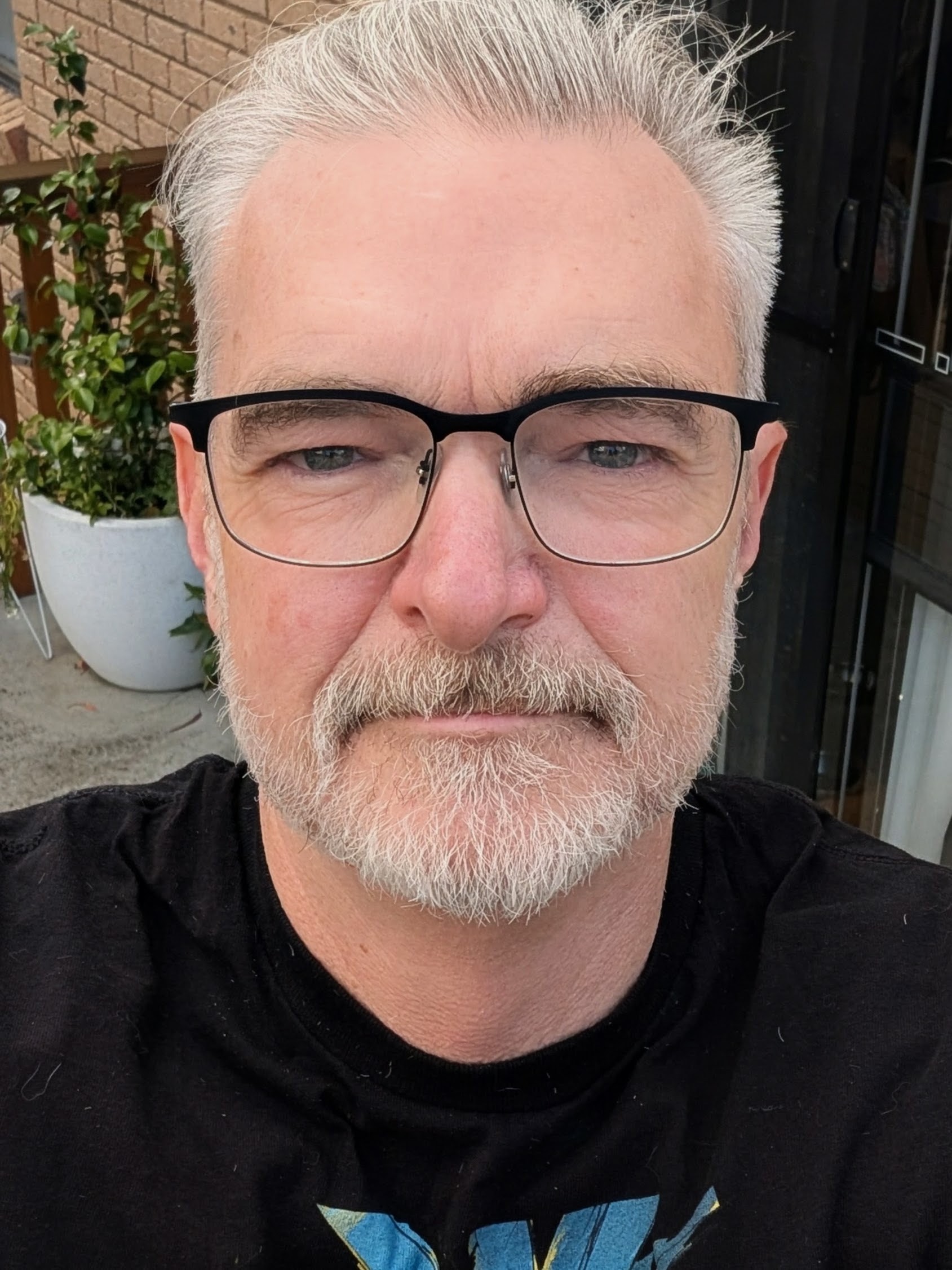
I am a small business owner from Clark. I have served this community from behind a counter for over a decade. I am not a career politician. I am running because the people of Clark deserve a representative whose accountability runs deeper than a party line.
I am committed to this community for the long term — as an independent candidate for the federal seat of Clark at the 2028 election, and if that door does not open, as a candidate for the Tasmanian state seat of Clark at the 2029 state election. This is not a one-shot campaign. This is a commitment to stay in the room until the people of Clark have the voice they deserve.
The One Test That Applies to Everything
Every policy position I hold comes from the same question: who makes the call, and who carries the cost?
If the answer is the same people — that is honest. If the answers are different — something is broken. Right now, too much is broken.
| Issue | Who makes the call | Who carries the cost |
|---|---|---|
| Energy / Hydro | National electricity market sets the price | Tasmanian households pay mainland gas rates for their own renewable energy |
| Stadium | AFL + governments commit the funding | Tasmanians carry all cost overruns and risk |
| Military commitments | Executive government announces the deployment | Australian families carry the risk — parliament never votes |
| Housing crisis | Investors benefit from tax concessions on property | First home buyers and renters carry the inflated cost |
| Corporate packaging | Corporations profit from cheap single-use products | Public funds the cleanup and environmental damage |
This is not a left-wing principle or a right-wing principle. It is an honesty principle. It is why a conservative and a progressive can both hear the energy policy and agree it is fair.
Who I Am
I grew up in Chigwell — on Allunga Road, which I only recently learned is an Aboriginal word for “the sun.” The Country was always speaking. Most of us just were not listening.
I am not a career politician. I run Crisp n Sweet in Claremont and have served this community for over a decade. I have watched costs rise every year — materials, power, supplies — because they come out of my margin. I understand what it means when a government decision lands on household budgets, because I live it.
Through the shop, my partner Laura and I have built genuine long-term relationships in Clark — including with Elders and First Nations community members whose trust was earned over years, not manufactured for a campaign brochure.
I have lived through pivotal political moments in this country. I have watched governments open doors and close them. I have watched the two-party system protect itself while ordinary people carry the cost of decisions made in rooms they were never invited into.
That is why I am running — not against any one person, but for a different way of doing politics. Accountable. Local. Honest about who pays for what.
Energy: Tasmania’s Power Should Work for Tasmanians
Tasmanian households are paying for their own renewable hydro power at mainland gas prices. That is not an energy market — it is a transfer of wealth from Tasmanian families into a national system driven by gas prices set by global conflict and fossil fuel markets.
My position: Hydro Tasmania should decouple from the National Electricity Market for domestic pricing. Tasmanians should pay the cost of generating their own clean renewable energy, plus a modest return to the public. Not mainland gas rates. Not prices driven by a war on the other side of the world.
The estimated household saving: $300–$500 per year for the average Tasmanian household. That money stays in Clark, not on the mainland.
This is the principle applied directly. Tasmania built the infrastructure. Tasmanians should benefit from it. If you own the asset, you should not be paying someone else’s price to use it.
Housing: The Crisis the Media Stopped Talking About
The housing crisis did not end when the media moved on. Families are still on waiting lists. Rents are still unaffordable. People are still sleeping in cars. The front page changed — nothing on the ground did.
The policy failure is structural. Negative gearing and the capital gains tax discount make property the most tax-advantaged investment available to high-income earners. Simply building more supply does not fix affordability when the demand signal from those tax advantages remains fully intact. Investors buy the new supply too.
Labor had a policy to address this. They abandoned it. The Housing Minister — whose portfolio covered this crisis — never once voted against her party in eighteen years in parliament. The cost still falls on the people who need homes.
I will push for reform of the tax treatment of investment property alongside genuine supply investment. Both levers, honestly applied.
Macquarie Point Stadium: Support It, But Eyes Open
I support the stadium. Tasmania has wanted an AFL team for decades and I understand why.
But the timeline has just been pushed to 2031. That means the Tasmania Devils will play at Bellerive Oval for multiple seasons — and anyone who has tried to leave Bellerive after a match knows what that means for traffic in the southern corridor. The transport plan for those interim years needs to start now.
The cost question also cannot be avoided. I run a business. Every year I watch costs go up — materials, labour, contracts. A two-year delay on a $715 million project is not a two-year delay at the same price. What is the revised cost estimate? That number needs to be public.
The people of Tasmania carry the risk on this project. That comes with the right to straight answers. Supporting a project and asking hard questions about how it is funded are not opposites. That is what accountability looks like.
First Nations: Country Was Always Talking
I grew up on Allunga Road in Chigwell. Allunga is an Aboriginal word for “the sun.” I did not know that as a child. The name was there in every letter I ever wrote, on every envelope I ever addressed. The Country was speaking the whole time.
Clark covers Muwinina Country — the land of the Aboriginal people of southern Tasmania. When decisions are made about what gets built at Macquarie Point, how the waterfront develops, where public housing goes — these are decisions made on Muwinina Country. Consultation is not optional. It is respect, and increasingly, law.
Through our business, Laura and I have built genuine relationships with Elders and First Nations community members over many years — not for a campaign, but because people walked through our door and trust was built slowly. That is where my position on First Nations recognition comes from. Not a policy document. A relationship.
I support palawa kani language preservation, genuine consultation before major developments on Country, and education that tells Tasmanian children what the names around them actually mean.
Ignorance is not a defence. It is a choice that can be unchosen.
Accountability: Parliament Should Vote Before We Go to War
Australia has committed military assets to the conflict in Iran — 85 ADF personnel, an E-7A Wedgetail battle management aircraft, and air-to-air missiles to the UAE. The Wedgetail is not a passive presence. It coordinates air operations and provides the targeting picture that makes strikes possible.
Parliament has not voted on any of it. No debate. No authorisation. A press release and a deployment.
Pine Gap processes intelligence that feeds into US and Israeli military operations. Australians carry the geopolitical risk of that relationship — and parliament has never been asked to assess it openly.
I filed a Freedom of Information request with the Department of Defence on 6 March 2026 seeking risk assessments on Australian territory and assets, and documents relating to Full Knowledge and Concurrence protocols. A decision is due by 5 April 2026. Whatever the response — documents released, heavy redaction, or a handball to another agency — the answer will be public.
My position: Australian military commitments should be authorised by the Australian parliament. That is not weakness. That is exactly how a democracy is supposed to work.
The 60-Year Receipt: 1968 to 2026
Australia feels upside down because we can trace exactly when the rules changed. We shifted from building for people to extracting for assets.
- 1972–1975: Whitlam-era ambition framed health and education as rights.
- 1983–1996: Financialisation deepened, HECS started, and PRRT rules diverged from public expectations.
- 1999: CGT discount accelerated the housing-as-asset model.
- 2014–Present: LNG export scale grew while public return stayed contested.
The result is today’s life lottery. It is not inevitable. It is policy design, and policy can be redesigned.
How We Pay For It
Every major commitment in this platform is tied to a funding source. The goal is simple: stop waste, return public wealth to the public, and invest where households feel the difference.
- Resource return: modernise gas and resource royalty settings so Australians receive a fair return from publicly owned resources.
- Energy decoupling: domestic Hydro Tasmania pricing separated from the NEM returns savings directly to Tasmanian households.
- Close tax loopholes: tighten integrity rules and reduce legal tax avoidance pathways used by large corporations and property investors.
- Anti-corruption savings: stronger procurement standards and transparent contracting to cut overpaying and insider deals.
- Reprioritise spending: shift federal dollars from low-impact subsidies into housing delivery, health access, and household cost relief.
- Stage implementation: roll out programs in phases, with clear costings and public reporting before each expansion step.
We are not promising everything at once. We are sequencing delivery, publishing the numbers, and making sure each policy is paid for before it scales.
Health: The Clark Health Dividend Map
Three 24/7 Maker Super-Clinics for the north, west, and south of Greater Hobart. This model takes pressure off the Royal Hobart Hospital, shortens wait times, and gets families urgent care closer to home.
Economic Democracy: Workers Deserve a Seat at the Table
When executives make decisions about workers’ livelihoods and workers have no voice in those decisions, the cost falls one way. Always down.
I support giving workers representation on company boards for large employers — as Germany and the Nordic countries have done for decades. I support the right of workers to form a cooperative and make a first bid when a business is being sold. I support the Alaska model: public resources generating a return that flows back to citizens, not just to shareholders.
These are not radical ideas. They are honest ones. If you share the risk, you should share the return.
Transport: The Derwent Estuary Electric Ferry Network
The solution to Hobart’s transport crisis is not a new lane on the Southern Outlet. It is the river. The Derwent runs for 120 kilometres — from New Norfolk in the north to the Channel in the south — past Moonah, Claremont, Cadbury, the CBD, Mac Point, Sandy Bay, Kingston Beach, Blackmans Bay, Bellerive, and out toward Kettering. Every one of those communities sits on the water. Not one of them has a ferry service.
The Derwent is not a background feature. It is the transport network Tasmania never built. InCat is already building the vessels — in Hobart. The river is already there. The only thing missing is the political will to use it.
The Full Estuary — Every Community on the River
This is not a single route between Kingborough and Mac Point. It is a network that uses the full length of the Derwent as a transport spine — with Mac Point as the central hub connecting every reach.
| Route Corridor | Est. Journey | Priority |
|---|---|---|
| New Norfolk → Bridgewater → CBD | ~55 min | Critical |
| Claremont / Cadbury → CBD | ~20 min | Critical |
| Moonah / Glenorchy → CBD | ~15 min | Critical |
| Kingston Beach → Mac Point → CBD | ~25 min | Critical |
| Blackmans Bay → Mac Point → CBD | ~30 min | High |
| Bellerive → Mac Point (Cross-Derwent) | ~10 min | High |
| Sandy Bay → Mac Point → CBD | ~15 min | High |
| Kettering / Channel area → Hobart | ~45 min | Medium |
New Norfolk and Claremont — For the People Who Need It Most
New Norfolk is one of the most economically disadvantaged communities in greater Hobart. Connected to the city by one highway. Nothing else. An electric ferry from New Norfolk through Bridgewater to the CBD would be transformative — not for tourists, but for the people who live there and need to get to work.
Claremont is where my shop is. Crisp n Sweet. The Cadbury factory down the road employs hundreds of shift workers — people who need to be there at 6am and do not always have a reliable car option. A ferry stop at Claremont serves those workers. It serves my community. These are not abstract beneficiaries. They are my neighbours.
InCat and the Tiered Fleet
InCat Tasmania builds world-class battery-electric ferries from their Hobart shipyard — including some of the largest electric passenger vessels ever built, now operating internationally. The lower estuary needs large, high-speed catamarans carrying 200+ passengers. The upper river — narrower and shallower above the CBD — needs smaller shallow-draft electric vessels. InCat builds both. One company, one contract, one zero-emission standard across the full network.
If InCat is building electric ferries for Buenos Aires and European cities, the first buyer should be Tasmania. Running those vessels on our renewable energy grid means genuinely zero-emission transport — not the mainland accounting trick where “electric” still means coal.
How We Fund It: The Derwent Maritime Trust
This is where transport policy meets economic democracy. The ferry network creates value. When a terminal opens at Kingston Beach or Claremont, surrounding properties become more accessible and their value rises. That uplift was created by public investment. Under the current system, private landowners pocket it. Under the model I am proposing, a portion of that uplift — a betterment levy — flows back into the infrastructure that created it.
The Derwent Maritime Trust would be community-owned and governed by the people who use the river: worker representatives from vessel crews and terminal staff, user representatives elected by registered commuters, council seats for Hobart, Glenorchy, Kingborough, and Derwent Valley, and a founding equity stake for InCat in exchange for the fleet. Surplus revenue stays in the Trust. It does not go to shareholders or general government revenue.
Funding streams: betterment levy on properties near terminals, a Mac Point development contribution (the stadium precinct cross-funds the network it depends on), a federal infrastructure grant for capital costs, event-day fare surcharges cross-subsidising concession fares, and tourism revenue from the scenic New Norfolk to waterfront route. This is not a government subsidy. It is a community investment that pays for itself.
If you share the risk, you share the return. The communities along the Derwent built this region. The value their land generates should fund the network that serves them — not be extracted upward.
The Stadium Test
I support the stadium if the conditions are met. Transport is not an optional add-on. It is a precondition. I am calling on the State and Federal Governments to commit to the following before the stadium receives final construction approval:
- Commission an independent feasibility study for the full Derwent Estuary Electric Ferry Network — New Norfolk to Channel — with Mac Point as the central hub.
- Establish the Derwent Maritime Trust as the community-owned governance structure.
- Build a Mac Point ferry terminal as part of the stadium precinct, funded before construction begins.
- Open procurement discussions with InCat Tasmania for a tiered fleet of battery-electric vessels.
- Pilot the New Norfolk to CBD upper river service within two years of the next state election.
- Make the integrated transport plan a binding precondition of development approval — not an aspiration to be addressed after the first congestion crisis.
You cannot build a 23,000-seat stadium on the Hobart waterfront and tell people to drive there. The river is the answer.
Empathy Doesn’t Stop at the Border
I spent some time on social media recently and I kept seeing the same thing: why are we spending money overseas when Australians are suffering? I understand the frustration. Cost of living is real. The housing crisis is real. People are struggling.
But I want to push back on the choice being offered. Because I think it is a false one — and I think someone benefits from people believing it is real.
If we leave our empathy at the border, we erode that empathy from inside.
The moment we teach ourselves that compassion has a geographic limit — that it is acceptable to feel nothing for suffering as long as it is happening far away — we do not contain that indifference at the border. It comes home. It shows up in how we talk about the person sleeping rough on Elizabeth Street. In how we think about people on welfare. In how we treat anyone who needs something we have decided they do not deserve.
Empathy is not a bank account that runs out if you spend it on strangers. It is a muscle. You either use it or you lose it. And a society that has decided some suffering does not count — because of where it happens, or who it happens to — has already started the process of deciding whose suffering matters at home.
Human civilisation exists because we learned to cooperate — across families, across communities, across borders. Every time in history that societies turned inward and decided compassion had geographic limits, they weakened. Every time they built across those limits, they grew stronger. That is not ideology. That is the record.
Australia is one of the wealthiest countries on earth. We have the resources and the capacity to look after our own and to be part of a world that takes care of each other. These are not competing choices. They are the same choice.
The real question — the one I wish more people were asking — is not why we are helping people overseas. It is why, with all the wealth this country generates, so many Australians still feel left behind. That answer is not found at the border. It is found a lot closer to home.
Think Big, Build Better
Government should not manage decline. It should imagine a better reality, then use the tools of the state to build it.
| The Issue | Think Big (The Vision) | Build Better (The Execution) |
|---|---|---|
| Housing | Treat housing as a right, not an asset class. | Commission federal modular housing hubs in Clark to deliver homes at scale. |
| Energy | Tasmania’s clean energy belongs to Tasmanians first. | Decouple Hydro Tasmania from the NEM for domestic pricing. $300–$500 per household back in Clark. |
| Salmon | Build a Wild Tasmania brand backed by science and sustainability. | Mandate a transition to land-based RAS with workers protected through the shift. |
| Transport | The Derwent Estuary Electric Ferry Network — New Norfolk to Channel. A community-owned Derwent Maritime Trust. InCat builds the fleet in Hobart. The river becomes the spine of greater Hobart’s transport system. | Betterment levy funds the Trust. Mac Point stadium contributes to the terminal. Federal infrastructure grant covers vessel procurement. Pilot the New Norfolk service within 2 years of the 2029 election. |
| Accountability | Parliament votes before Australians go to war. | Mandatory parliamentary authorisation for military deployments. FOI on Pine Gap and joint facility oversight. |